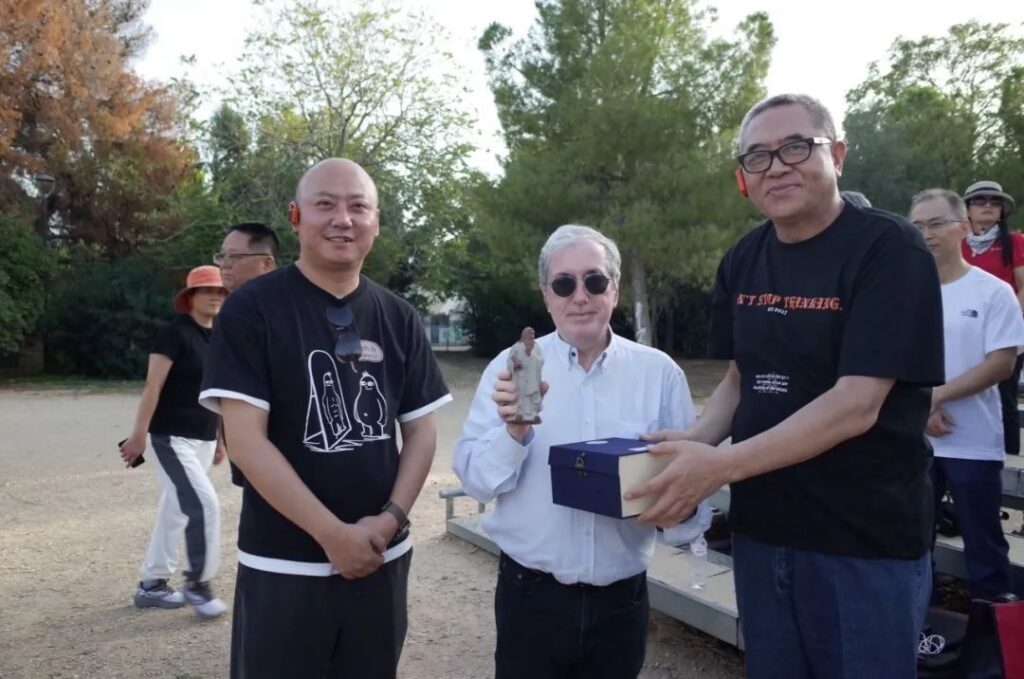
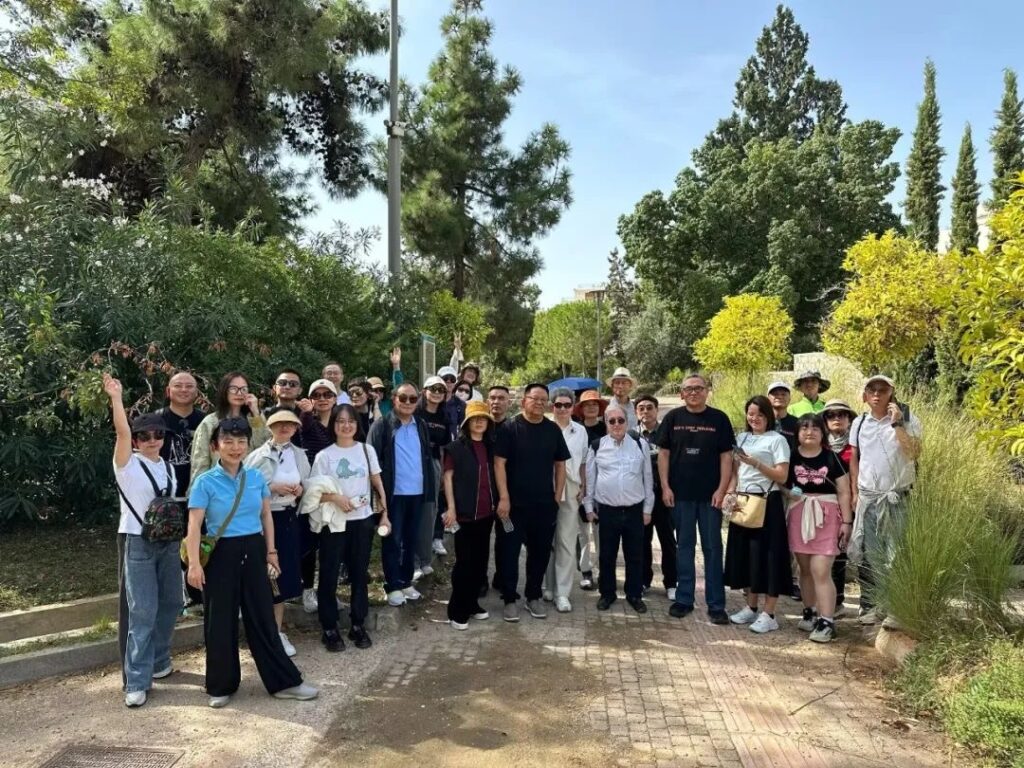
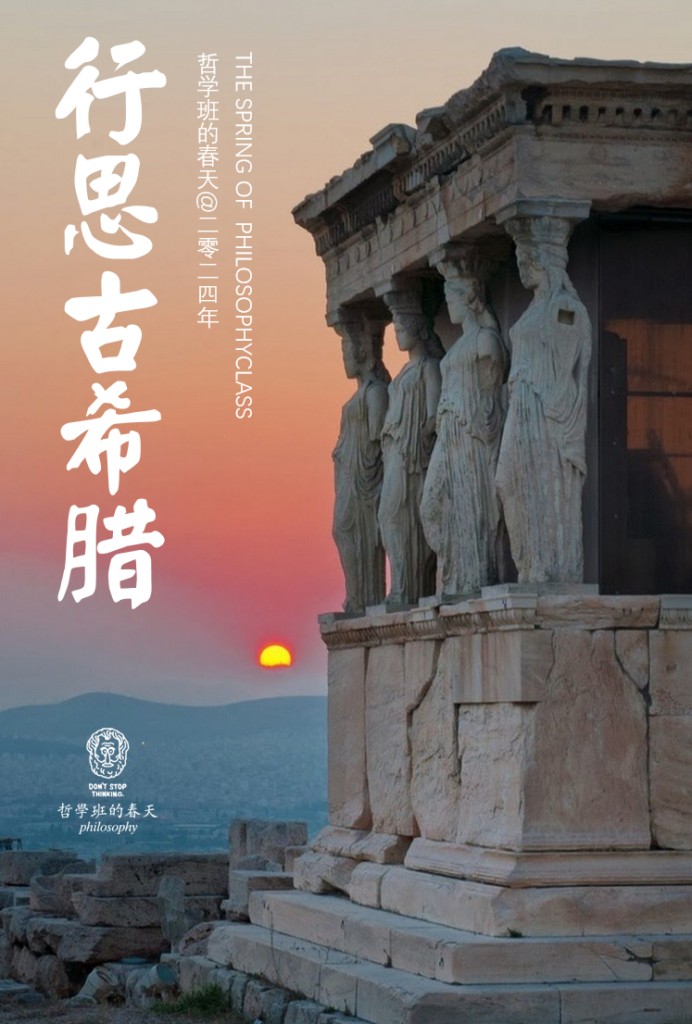
Guided by Emeritus Professor Stelios Virvidakis of the University of Athens, with translation provided by Meilin Lyu, and in collaboration with BLOOM Travel Group and the Spring of Philosophy Class (哲学班的春天), the group embarked on an immersive philosophical journey through three foundational sites of Western thought.
- Lyceum of Aristotle
The visit began at the site of the ancient Lyceum, founded by Aristotle in 335 BCE after he returned to Athens and modeled his school on that of his teacher, Plato. Originally a gymnasium for military training, the Lyceum featured shaded walkways, fountains, and a temple to Apollo, providing a serene setting for philosophical inquiry. It was here that Aristotle lectured for 13 years, developing key works in ethics, politics, and natural sciences, until he was accused of impiety in 323 BCE and forced to leave the city. He died the following year. The Peripatetic School, named after the covered walkways (“peripatoi”), was born here. - “Socrates’ Prison”
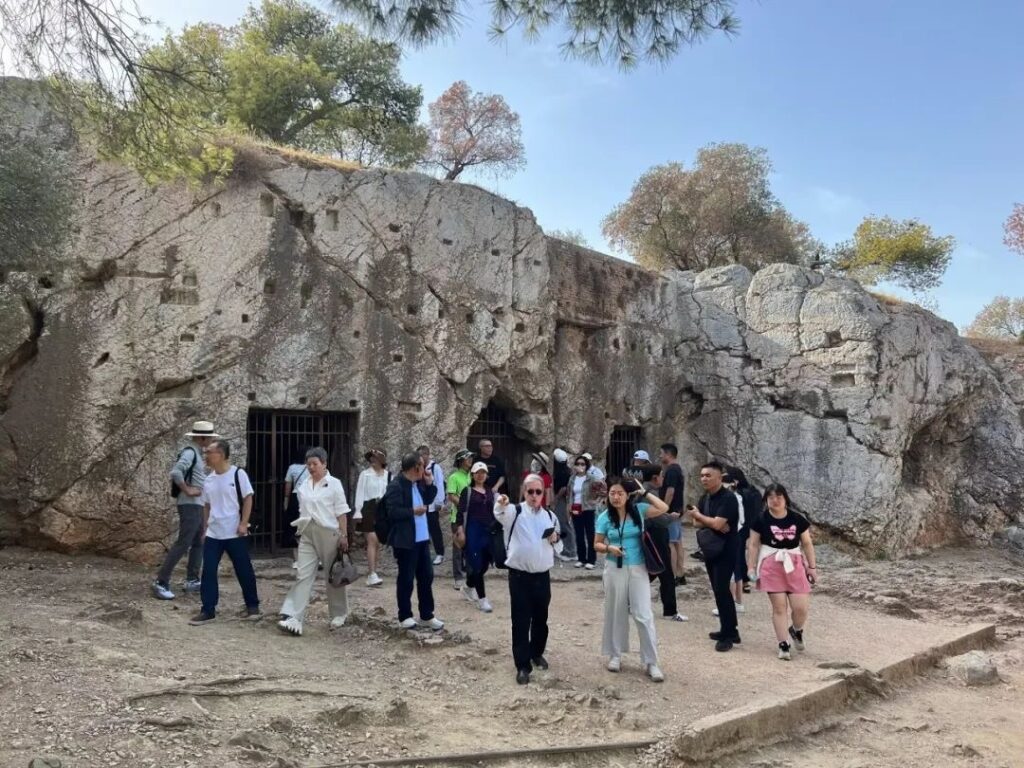
The second stop was the site traditionally (though not definitively) associated with Socrates’ imprisonment and death in 399 BCE. According to tradition, Socrates was sentenced to death by a jury of 500 citizens and spent his final days in discussion with friends and disciples, notably convincing Crito that adherence to the law was more important than saving one’s life. Though the site’s authenticity is debated, it served as a powerful setting for reflecting on Socratic philosophy and the idea of dying for one’s principles. - Plato’s Academy
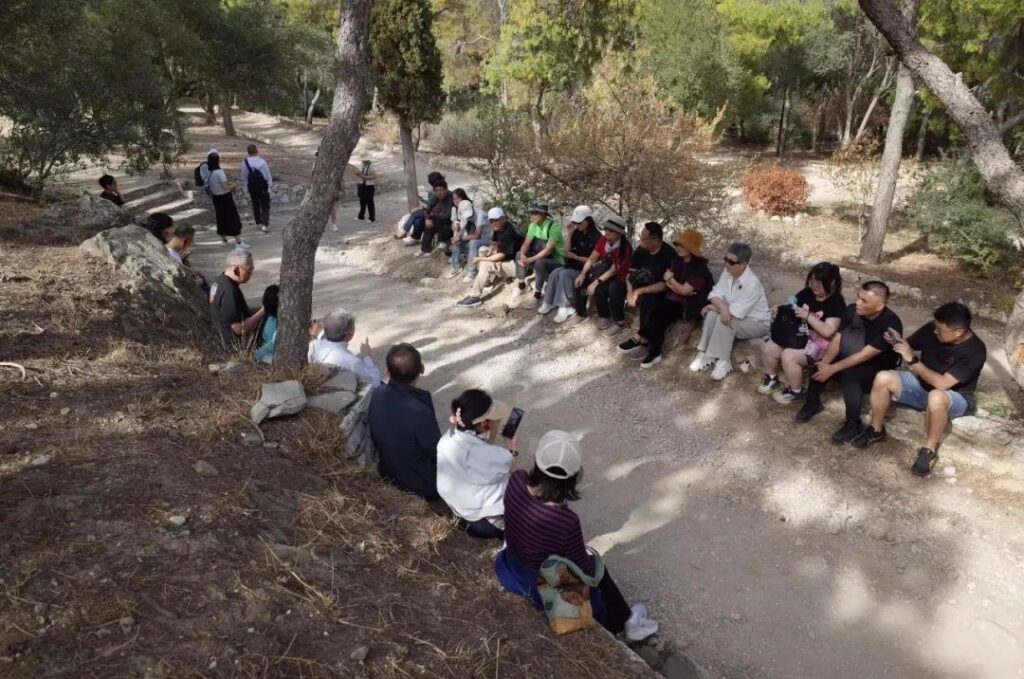
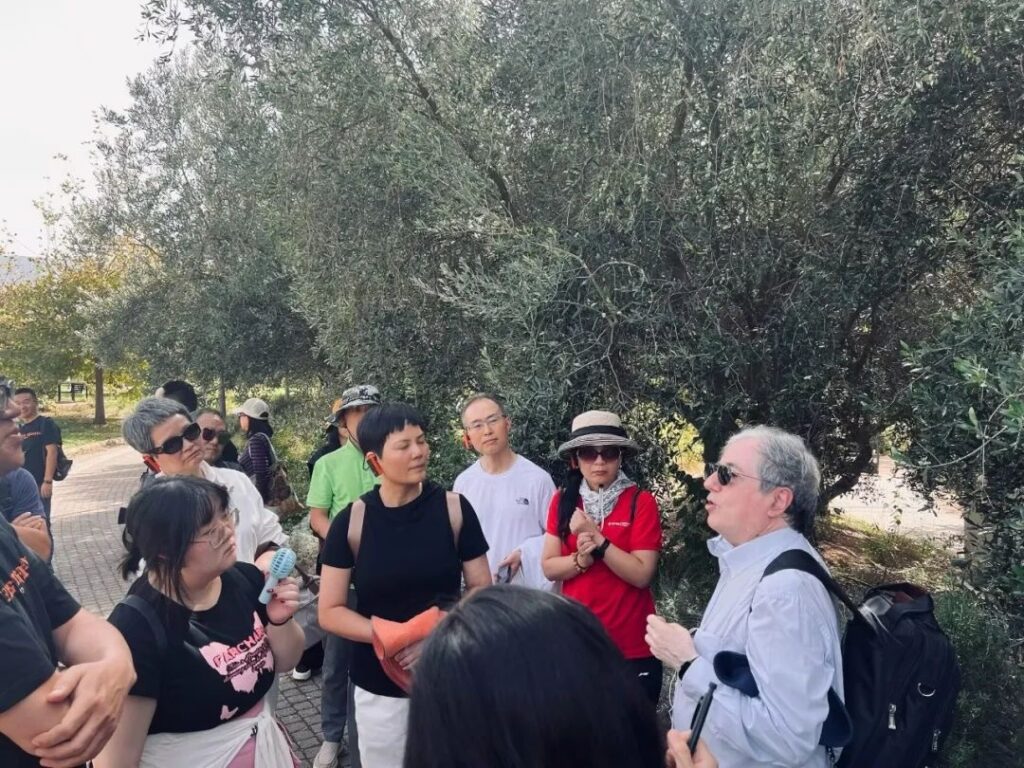
The final and perhaps most symbolic stop was the archaeological site of Plato’s Academy—one of the earliest institutions of higher learning in the Western world. Though little remains structurally, the grove is preserved as a quiet park, largely unnoticed by tourists. Here, Prof. Virvidakis spoke about Plato’s monumental influence on the Western philosophical tradition, drawing comparisons to Confucius in the East.
Throughout the walk, Prof. Virvidakis provided historical context, philosophical insights, and reflective commentary on the significance of each site, offering students a rare opportunity to connect physical space with philosophical legacy.